

Performance supplements
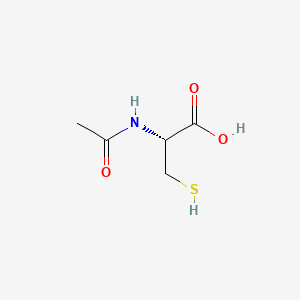
N-acetylcysteine
An antioxidant-related medicine whose effect on exercise recovery is more complicated than “less inflammation is better.”
Small human exercise trials and medicinal labeling
Also known as: NAC
Practical use
Applying the explained evidence
- Where it fits
- An antioxidant-related medicine whose effect on exercise recovery is more complicated than “less inflammation is better.”
- Put the information into practice
- A smaller inflammatory-marker rise can occur alongside a worse functional result. The meaningful endpoint is restored performance and health, not the lowest possible laboratory marker.
- Connect evidence to your training
- Specify the outcome you want to improve and a repeatable way to measure it. Check whether the study participants, activity and product match the claim; avoid crediting one supplement for changes made alongside several training or diet changes.
- Keep this limit in view
- Only placebo restored full performance by the final recovery measurement in the eccentric-exercise experiment.
Overview
N-acetylcysteine supplies cysteine for glutathione-related biology. Acetylcysteine also has formulation-specific medical uses, including intravenous treatment of acetaminophen poisoning. That indication does not establish protection from unrelated drug exposure.
Risks and limitations
Intravenous medicinal labeling warns about hypersensitivity, hypotension and respiratory reactions. Those route-specific rates cannot simply be assigned to oral supplements. Exercise studies also raise a separate concern: suppressing some signals can impair recovery.
How to read this
A smaller inflammatory-marker rise can occur alongside a worse functional result. The meaningful endpoint is restored performance and health, not the lowest possible laboratory marker.
Research explained
Early improvement, later recovery concern
Who was studied
Ten men; blinded crossover after 300 eccentric contractions, followed for eight days.
What was found
NAC attenuated some inflammatory markers and early strength loss, but blunted several repair-related signaling responses. Full performance recovery occurred only with placebo.
What it cannot establish
Very small, deliberately damaging exercise protocol; not proof that every usual training program responds identically.
Read the original studyMetabolism versus performance
Who was studied
Nine well-trained male cyclists; double-blind crossover interval sessions followed by a ten-minute time trial.
- Mean power: NAC
- 305 W
- Mean power: placebo
- 319 W
What was found
Mean time-trial power was 305 W with NAC versus 319 W with placebo. Lipid-peroxidation measures fell, while the authors estimated a 4.9% power decrement with wide uncertainty.
What it cannot establish
Small acute experiment. Lower oxidation markers did not establish improved performance; route and protocol must match before extrapolation.
Read the original studyInflammation is not one undesirable variable
The recovery experiment shows that early marker suppression and later repair can move in different directions.
Supporting sourceAntioxidant is not synonymous with recovery
Reduced lipid-peroxidation measurements coexisted with lower cycling power. A biochemical mechanism cannot replace the performance result.
Supporting sourceMedical indication boundaries
Treatment of acetaminophen poisoning is a specific clinical use. It does not validate self-managed protection against anabolic-steroid liver injury.
Supporting sourceRoute and symptoms matter
Acute breathing difficulty, faintness or a severe reaction around a medicinal infusion requires prompt clinical attention; supplement and infusion evidence must remain separate.
Supporting sourceWhat remains unresolved
These studies cannot define an ideal daily antioxidant strategy or show long-term effects across different diets and training states.
Supporting sourceClaims versus findings
Not established
Lower exercise inflammation always means better recovery.
Only placebo restored full performance by the final recovery measurement in the eccentric-exercise experiment.
Check the evidenceCommon questions
Does a better oxidation marker prove a better workout?
No. The cycling trial found lower lipid peroxidation alongside lower mean power.
SourceSources
Eccentric-exercise recovery experiment
Cycling metabolism and performance trial
Acetadote prescribing information
Sources checked 2026-09-28.
General education; not a personal treatment plan.