

Peptides
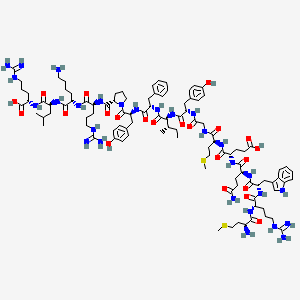
MOTS-c
A mitochondrial-derived peptide studied in metabolism and exercise biology. Measuring natural levels in humans is different from testing an administered product.
Research explained · evidence varies by outcome
Also known as: mitochondrial open reading frame of the 12S rRNA-c
Practical use
Applying the explained evidence
- Where it fits
- A mitochondrial-derived peptide studied in metabolism and exercise biology. Measuring natural levels in humans is different from testing an administered product.
- Put the information into practice
- Keep three categories separate: naturally occurring concentrations, administered MOTS-c in animal studies, and any human intervention trial. An association between a natural concentration and strength cannot show that increasing it artificially will improve strength.
- Check what was actually tested
- Match the exact molecule, formulation and study setting to the claim. A result for a related peptide, a cell model or an animal model does not establish the same result for a marketed human-use product.
- Keep this limit in view
- The performance intervention was in mice. These percentages are not estimates of benefits for human athletes, and the study does not establish human long-term safety.
Overview
MOTS-c is studied as a signal connecting mitochondrial activity with cellular responses to stress. Research asks both whether the body’s own MOTS-c changes around exercise and whether experimental administration alters performance in animals. Those are separate research questions; an exercise-associated blood measurement is not a treatment trial.
Risks and limitations
The experiments summarized here do not establish a long-term human adverse-event profile or safe use with other performance compounds. Results in trained animals do not resolve product identity or safety in a human purchaser.
How to read this
Keep three categories separate: naturally occurring concentrations, administered MOTS-c in animal studies, and any human intervention trial. An association between a natural concentration and strength cannot show that increasing it artificially will improve strength.
Research explained
Training responses and acute performance in rodents
Who was studied
Rodent training/detraining experiments and an acute exercise test in untrained mice.
What was found
The study reported higher muscle MOTS-c after training. In the acute mouse experiment, running time increased about 12% and distance about 15%.
What it cannot establish
The performance intervention was in mice. These percentages are not estimates of benefits for human athletes, and the study does not establish human long-term safety.
Read the original studyHuman exercise-response experiment
Who was studied
30 participants allocated to endurance exercise, resistance exercise or control, with muscle and blood sampling.
What was found
The study examined naturally occurring mitochondrial-derived peptides and gene-expression responses after exercise.
What it cannot establish
The intervention was exercise, not administration of a MOTS-c product. It therefore cannot demonstrate the efficacy of an exogenous peptide.
Read the original studyConcentration and strength association
Who was studied
20 physically active volunteers; resting serum measurement plus jump and cardiopulmonary exercise testing.
What was found
MOTS-c concentration correlated with some lower-body force/power and muscle-mass measures, but not maximal oxygen uptake.
What it cannot establish
Small cross-sectional observational study. Correlation does not establish which variable causes the other or predict the effect of supplementation.
Read the original studyMechanism versus an exercise replacement
Cellular stress signaling can help explain why a molecule is interesting. Exercise affects many organs and pathways, so reproducing one signal cannot be assumed to reproduce all its benefits. The useful question is which outcome changed, in what model, with what tradeoff.
How to interpret the term exercise mimetic
In this context the label describes selected experimental effects resembling parts of an exercise response. It is not evidence that the compound replaces resistance training, cardiovascular activity or a structured program.
Supporting sourceThe missing translation step
A convincing human intervention study would need a defined population, verified material, a suitable control, meaningful performance or health outcomes, and adequate harm monitoring. Natural-level correlations and rodent experiments do not supply that missing step.
Common questions
Does MOTS-c research include humans?
Yes, the cited human studies measure natural concentrations and exercise responses. That is different from demonstrating that administering MOTS-c is beneficial.
Can the mouse running improvement predict my results?
No. Species, exercise protocol, exposure and outcome differ. The number belongs to that experiment, not a personal forecast.
Sources
Training responses and acute performance in rodents
Human exercise-response experiment
Concentration and strength association
Sources checked 2026-09-28.
General education; not a personal treatment plan.