

Nootropics
Modafinil
A prescription wakefulness medicine whose healthy-user cognitive findings vary across tasks and studies.
Established wakefulness indications; mixed enhancement studies
Also known as: Provigil
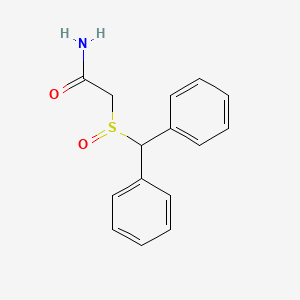
Practical use
Reviewed practical notes
- Define the problem
- Distinguish excessive sleepiness from an ambition to work longer.
- Measure the right outcome
- Feeling more awake is not proof of more accurate decisions.
- Check the label
- Interactions, a new rash and changes in mood or alertness deserve clinical attention.
Overview
Modafinil is prescribed for excessive sleepiness associated with narcolepsy, obstructive sleep apnea or shift work disorder in adults. In sleep apnea it treats sleepiness, not the airway obstruction. It is a medicine, despite its frequent appearance in nootropic discussions.
Risks and limitations
The label warns about serious rash, psychiatric symptoms, persistent sleepiness and cardiovascular concerns. It also identifies interactions, including reduced effectiveness of steroidal contraception. Treatment decisions need a complete medicine review, not just a comparison of perceived focus.
How to read this
Wakefulness is not the same as restored sleep or uniformly better judgment. Persistent sleepiness still matters for driving and other hazardous activities; the underlying sleep disorder remains part of treatment.
Research explained
Single-exposure testing in healthy men
Who was studied
60 healthy young men in a randomized double-blind placebo comparison.
What was found
Some memory, planning and response-inhibition outcomes improved. Response latency was slower on several tasks, including decision making and planning.
What it cannot establish
Task-specific changes after a single exposure cannot establish better academic achievement, sustained productivity or safety with repeated nonmedical use.
Read the original studyA separate healthy-volunteer experiment
Who was studied
30 healthy, non-sleep-deprived students aged 19–23 in a randomized double-blind placebo-controlled experiment.
What was found
The study did not find significant cognitive-test differences; some somatic anxiety measures increased.
What it cannot establish
A small study cannot exclude every effect, but its null findings challenge a broad claim that healthy people reliably think better.
Read the original studyTreating sleepiness does not treat the obstruction
The prescribing information makes this distinction explicit for obstructive sleep apnea. An improvement in alertness is not evidence that breathing during sleep is corrected or that established airway treatment can be abandoned.
Supporting sourceSources
Healthy-volunteer cognition study
Current PROVIGIL prescribing information
Sources checked 2026-10-01.
General education; not a personal treatment plan.