

Androgens
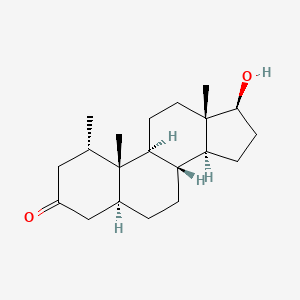
Mesterolone
A synthetic androgen with older fertility trials that give mixed results; it should not be described as a proven fertility safeguard.
Human evidence / important limitations
Also known as: Proviron
Practical use
Applying the explained evidence
- Where it fits
- A synthetic androgen with older fertility trials that give mixed results; it should not be described as a proven fertility safeguard.
- Put the information into practice
- Pregnancy, sperm concentration and sperm motility are different outcomes. A numerical difference in pregnancy rates is not necessarily statistically reliable.
- Formulation and purpose
- Write down the exact compound and formulation behind a claim. Compare the studied population and purpose with the situation being discussed; evidence for medical replacement does not automatically answer a physique-enhancement question.
- Keep this limit in view
- The uncertainty does not establish a fertility benefit. Recruitment and strict-eligibility populations also differed.
Overview
Mesterolone is an androgen related to dihydrotestosterone. Its historical clinical research includes idiopathic male infertility, but that is distinct from protection against suppression caused by other androgen use.
Risks and limitations
The product information describes androgen-related cautions and requires attention to persistent erections and liver-related concerns. Trial results in infertile men do not establish the safety or effectiveness of combining it with other androgens.
How to read this
Pregnancy, sperm concentration and sperm motility are different outcomes. A numerical difference in pregnancy rates is not necessarily statistically reliable.
Research explained
WHO multicentre fertility trial
Who was studied
248 couples recruited across seven centres; 157 met the strict eligibility criteria. Men received six months of treatment; pregnancy was assessed eight months after randomization.
What was found
Pregnancy estimates were 9% with placebo and 12% or 16% in the two active groups. Relative estimates versus placebo were 1.3 (interval 0.5–3.2) and 1.8 (0.7–4.4), both including no difference. Semen-quality changes did not significantly differ between groups.
What it cannot establish
The uncertainty does not establish a fertility benefit. Recruitment and strict-eligibility populations also differed.
Read the original studySmaller oligospermia trial
Who was studied
40 subfertile men randomized to mesterolone or placebo for more than four months.
What was found
Sperm concentration, total sperm count and semen volume improved in the active group; motility and morphology did not. The reported benefit was concentrated in mild or moderate oligospermia.
What it cannot establish
This smaller result does not erase the larger trial’s uncertainty or demonstrate prevention of androgen-induced infertility.
Read the original studyPharmacokinetics: molecule and formulation matter
The Spanish product information reports a terminal half-life of approximately 12–13 hours for oral mesterolone. A plasma half-life describes concentration decline; it is not the duration of every downstream biological effect or a dosing recommendation.
Supporting sourceSources
WHO multicentre fertility trial
Pharmacokinetics: molecule and formulation matter
Sources checked 2026-09-28.
General education; not a personal treatment plan.