

Performance supplements
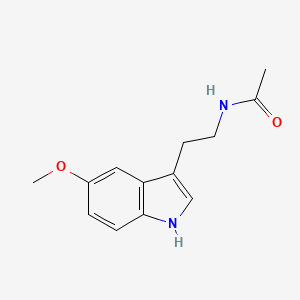
Melatonin
A circadian signal with formulation- and age-dependent sleep evidence; the label on a supplement may not predict its actual contents.
Randomized insomnia trials plus product-quality research
Practical use
Applying the explained evidence
- Where it fits
- A circadian signal with formulation- and age-dependent sleep evidence; the label on a supplement may not predict its actual contents.
- Put the information into practice
- Immediate versus prolonged release, age, sleep complaint, timing and product composition all matter. An average improvement in a questionnaire is not the same as extra objectively measured sleep or better training adaptation.
- Connect evidence to your training
- Specify the outcome you want to improve and a repeatable way to measure it. Check whether the study participants, activity and product match the claim; avoid crediting one supplement for changes made alongside several training or diet changes.
- Keep this limit in view
- Low measured melatonin excretion did not identify benefit irrespective of age in the larger trial. Sleep complaints have multiple possible explanations.
Overview
Melatonin signals biological night through melatonin receptors. It is not simply a stronger-is-better sedative. In Europe, the prolonged-release medicine Circadin has a specific indication for short-term primary insomnia in adults 55 and older; supplement availability does not make every formulation clinically equivalent.
Risks and limitations
Drowsiness can impair driving or other tasks. The product information identifies interactions, including fluvoxamine, other sedatives and alcohol, and cautions around liver disease. Persistent poor sleep can reflect another disorder; suppressing symptoms does not establish recovery quality.
How to read this
Immediate versus prolonged release, age, sleep complaint, timing and product composition all matter. An average improvement in a questionnaire is not the same as extra objectively measured sleep or better training adaptation.
Research explained
Subjective sleep quality and next-morning alertness
Who was studied
170 primary-insomnia outpatients aged 55 or older; three-week randomized placebo-controlled trial of prolonged-release melatonin.
- Sleep-quality improvement: melatonin
- 22.5 mm on questionnaire scale
- Sleep-quality improvement: placebo
- 16.5 mm on questionnaire scale
What was found
Sleep-quality score improvement was 22.5 mm versus 16.5 mm with placebo; morning-alertness improvement was 15.7 versus 6.8 mm. These were questionnaire visual-analogue measures.
What it cannot establish
Small absolute between-group differences, subjective endpoints and an older selected population. The study does not establish gains in muscle recovery or effects of every store-bought formulation.
Read the original studyAge was more informative than low measured melatonin
Who was studied
791 adult outpatients aged 18–80; initial three-week randomization and an extension lasting 26 weeks.
What was found
In the elderly 65–80 subgroup, reported sleep latency changed−19.1 minutes with prolonged release versus−1.7 with placebo. Low baseline melatonin excretion alone did not predict a treatment difference irrespective of age.
What it cannot establish
Subgroup finding and diary-based endpoint; do not assign the elderly result to all 791 participants or younger athletes.
Read the original studyWhat commercial products actually contained
Who was studied
Laboratory analysis of 31 commercial supplements; chemical composition study, not a patient trial.
What was found
Measured melatonin varied from 83% below to 478% above label claims; serotonin was identified in eight products.
What it cannot establish
This sampled products at a particular time and market. It does not establish that every brand or current batch is inaccurate, nor measure clinical harm in consumers.
Read the original studyMechanism: a time signal
Melatonin participates in circadian signaling, particularly through MT1 and MT2 receptors. This biological role does not establish an anabolic effect.
Supporting sourceDo not turn questionnaire millimeters into minutes
The 170 person study’s 22.5 mm figure is a visual-analogue score change. Calling it 22.5 minutes of extra sleep would be a measurement error.
Supporting sourceAge and formulation limit transfer
The larger trial suggests that older age predicted response better than one low-melatonin classification. That does not validate self-diagnosing a deficiency from insomnia alone.
Supporting sourceQuality is separate from efficacy
A medicine’s trial evaluates a specified preparation. The supplement survey shows why an ingredient name and nominal amount may not fully describe actual exposure.
Supporting sourceWhat the safety data can establish
The trial found no rebound-insomnia signal after discontinuation, but three weeks in selected older patients cannot rule out every interaction, uncommon event or risk in other populations.
Supporting sourceClaims versus findings
Not established
If sleep is bad, melatonin must be low.
Low measured melatonin excretion did not identify benefit irrespective of age in the larger trial. Sleep complaints have multiple possible explanations.
Check the evidenceCommon questions
Can I compare a gummy directly with the prolonged-release trial?
Not automatically. Release characteristics and measured contents differ; the trial’s result belongs to its tested formulation and population.
SourceSources
Age and long-term response trial
Commercial supplement analysis
Sources checked 2026-09-28.
General education; not a personal treatment plan.