

Growth hormone
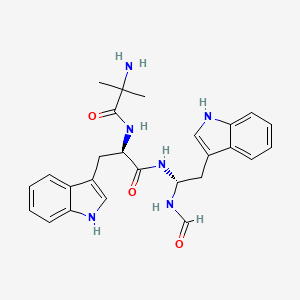
Macimorelin
An oral diagnostic stimulus for adult growth hormone deficiency, not a medicine proven to improve muscle or recovery.
Randomized diagnostic-comparison study; test-performance evidence
Also known as: Macrilen · Ghryvelin
Practical use
Clinical context and evidence interpretation
- Clarify why testing was ordered
- Bring the relevant pituitary history, symptoms and earlier endocrine results so the test is interpreted in context.
- Record the test details
- Keep the laboratory report, test name and date together; thresholds from another stimulation test are not automatically interchangeable.
- Let the testing team prepare medicines
- Provide a complete medicine and supplement list and follow the team’s preparation instructions; do not independently stop hormone replacement to imitate a protocol.
Overview
Macimorelin activates growth hormone secretagogue receptors and provokes a measurable GH response. US Macrilen is approved for diagnosing adult growth hormone deficiency. The response is interpreted within a supervised stimulation test rather than as a goal of ongoing treatment.
Risks and limitations
Macimorelin can prolong QT and interact with other QT-prolonging medicines. Strong CYP3A4 inducers can cause false-positive results; recent hypothalamic disease can cause false-negative results. Diagnostic performance is not established in BMI above 40 kg/m². Medication preparation belongs to the testing team.
How to read this
A stimulation test measures a response under defined conditions. Its sensitivity and specificity do not mean that the test is infallible or that a person’s symptoms are caused by GH deficiency.
Research explained
Comparison with the insulin tolerance test
Who was studied
A multicenter open-label randomized crossover study: 139 people in the efficacy analysis, spanning high, intermediate and low likelihood of adult GH deficiency plus matched healthy controls. Each test evaluated an acute GH response.
What was found
At the prespecified test-specific cutoffs, negative agreement was 95.38% and positive agreement 74.32%. Reported sensitivity was 87% and specificity 96%. First tests were evaluable in 99% with macimorelin versus 82% with insulin tolerance testing.
What it cannot establish
Accuracy depends on cutoffs, reference standard and the selected patients. These percentages are not the probability that a particular positive result is correct; that also depends on the prior likelihood of disease.
Read the original studyA laboratory response is not a treatment outcome
The study validated diagnostic classification. It did not assess stronger muscles, faster recovery or long-term benefit from repeated stimulation.
Supporting sourceWhy apparently conflicting tests happen
The comparator and macimorelin use different stimuli and decision thresholds. Recent hypothalamic injury, other hormone deficiencies and medicines can further complicate interpretation.
Supporting sourceClaims versus findings
Not established
Raising GH during this test proves a performance benefit.
Diagnostic stimulation and long-term treatment outcomes are different questions; the validation study answers the former.
Check the evidenceCommon questions
Is 96% specificity the chance my positive result is correct?
No. Specificity describes test behavior in people classified as not having the condition. A positive result’s meaning also depends on how likely the condition was before testing.
SourceSources
Comparison with the insulin tolerance test
US prescribing information; checked October 1, 2026
Sources checked 2026-10-01.
General education; not a personal treatment plan.