

Peptides
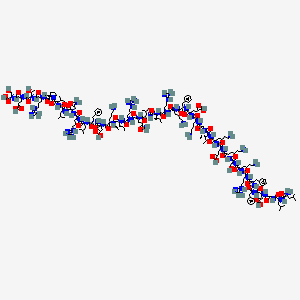
LL-37
A human host-defense peptide studied topically for chronic ulcers; the larger venous-ulcer trial did not show an overall healing benefit.
Small positive pilot; larger trial negative overall
Practical use
Reviewed practical notes
- Keep the route
- These findings concern topical ulcer treatment.
- Read the overall result
- The larger trial was negative in the full study population.
- Check standard care
- Compression and wound care were part of the clinical setting.
Overview
LL-37 is a host-defense peptide investigated for effects on wound repair. The clinical studies here applied a formulated product directly to chronic venous leg ulcers alongside wound care. They do not test a systemic injection for immunity or treatment of a general infection.
Risks and limitations
Trial reports described acceptable local tolerability in the studied settings. That cannot establish the safety of another formulation or route, or rule out uncommon adverse events. A chronic wound still requires attention to its underlying cause and standard wound management.
How to read this
The larger study is important because it tested whether an early signal reproduced across a broader trial population. Its overall result was negative. A favorable subgroup found afterward is a reason for another targeted trial, not proof that the original trial succeeded.
Research explained
First-in-human venous-ulcer pilot
Who was studied
34 participants in a small randomized, placebo-controlled topical-treatment study.
What was found
Some active groups showed improved healing measures, while another did not; one comparison with placebo did not reach conventional statistical significance.
What it cannot establish
Small groups, multiple comparisons and short follow-up limited certainty. The title’s broad positive wording should not replace the actual comparison results.
Read the original studyHEAL LL-37 phase IIb trial
Who was studied
148 treated patients with hard-to-heal venous leg ulcers, receiving topical study treatment or placebo with compression therapy.
What was found
The full population had no statistically significant healing benefit. A post hoc subgroup with larger ulcers had favorable findings.
What it cannot establish
The trial was not designed or powered to confirm that subgroup finding. It did not test systemic treatment or establish broad antimicrobial efficacy in patients.
Read the original studySubgroup success does not erase the overall result
A subgroup can reveal a useful hypothesis, particularly when disease severity differs. Confirmation requires a prospectively designed study rather than selecting the most favorable subset of a negative trial.
Supporting sourceSources
2021 phase IIb venous-ulcer trial
Sources checked 2026-10-01.
General education; not a personal treatment plan.