

Performance supplements
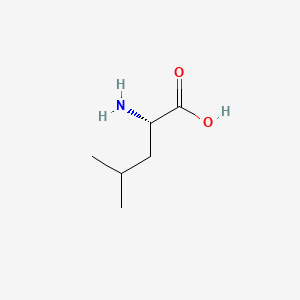
Leucine
An essential amino acid can increase an acute synthesis signal without producing extra long-term muscle gain on its own.
Acute tracer experiment and chronic randomized trial
Practical use
Applying the explained evidence
- Where it fits
- An essential amino acid can increase an acute synthesis signal without producing extra long-term muscle gain on its own.
- Put the information into practice
- Age, baseline protein intake, meal composition, resistance training and duration determine how relevant an amino-acid result is to an individual athlete.
- Connect evidence to your training
- Specify the outcome you want to improve and a repeatable way to measure it. Check whether the study participants, activity and product match the claim; avoid crediting one supplement for changes made alongside several training or diet changes.
- Keep this limit in view
- The long-term trial did not demonstrate that outcome.
Overview
Leucine is an essential branched-chain amino acid and a component of dietary protein. Acute muscle-protein synthesis and accumulated muscle mass answer different questions: a short signal cannot establish months of net tissue growth.
Risks and limitations
The cited studies are too small to define uncommon harms, a complete interaction profile or long-term safety across different medical conditions. More isolated leucine is not evidence that the rest of nutritional requirements have been met.
How to read this
Age, baseline protein intake, meal composition, resistance training and duration determine how relevant an amino-acid result is to an individual athlete.
Research explained
Acute muscle synthesis
Who was studied
20 healthy older men; controlled feeding with tracer measurements and muscle biopsy over five hours.
- Muscle synthesis: enriched feeding
- 0.083 % per hour
- Muscle synthesis: control
- 0.053 % per hour
What was found
Myofibrillar fractional synthesis averaged 0.083% per hour with leucine-enriched feeding versus 0.053% per hour in controls. Whole-body protein kinetics did not differ.
What it cannot establish
A tissue-specific hourly rate is not kilograms gained; short observation does not capture long-term breakdown and adaptation.
Read the original studyLonger-term outcomes were null
Who was studied
30 healthy older men, 15 per randomized arm; three months.
What was found
No increase in measured muscle mass or strength was found with isolated leucine versus placebo. Glycemic-control and lipid measures also did not improve.
What it cannot establish
Older men and a specific dietary context; this does not negate the need for sufficient complete protein.
Read the original studySynthesis is a rate, mass is a stock
The five-hour tracer measurement tracks incorporation into proteins. It cannot specify retained muscle after months of competing synthesis and breakdown.
Supporting sourceWhole-body and muscle results differ
The acute experiment changed myofibrillar synthesis without changing whole-body kinetics. The exact tissue and measurement belong beside the headline.
Supporting sourceWhy the long trial matters
Three months of extra leucine did not convert the acute rationale into measurable muscle or strength gains in the tested population.
Supporting sourceComplete protein remains a separate question
A null isolated-amino-acid trial does not show dietary protein is unnecessary; it tests an addition to an existing diet.
Supporting sourceWhat is missing for physique prediction
Neither trial estimates additional muscle in protein-sufficient young enhanced bodybuilders or an optimal supplement combination.
Supporting sourceClaims versus findings
Not established
More acute synthesis guarantees more muscle later.
The long-term trial did not demonstrate that outcome.
Check the evidenceCommon questions
Is 0.083% per hour a daily growth forecast?
No. It was measured over a limited feeding window and cannot simply be multiplied into permanent muscle gain.
SourceSources
Five-hour muscle-protein synthesis experiment
Sources checked 2026-09-28.
General education; not a personal treatment plan.