

Nootropics
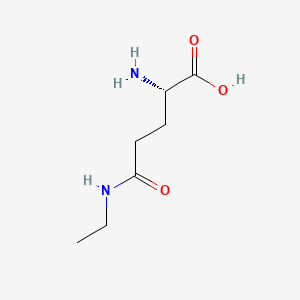
L-Theanine
A tea-associated amino acid studied for stress responses and attention; small trials and combination products need careful interpretation.
Human trials / outcome-specific evidence
Also known as: theanine
Practical use
Applying the explained evidence
- Where it fits
- A tea-associated amino acid studied for stress responses and attention; small trials and combination products need careful interpretation.
- Put the information into practice
- Compare the active group with placebo, not only with its own starting score. Also check whether the experiment used isolated L-theanine or a drink containing other ingredients.
- Make the claim measurable
- Specify the claimed effect: alertness, memory, attention or another outcome. Check whether researchers measured that outcome directly; a mechanism or a subjective feeling is a different kind of evidence.
- Keep this limit in view
- The roughly 18% within-group reduction is not an 18% advantage over placebo. Changes in time asleep or light sleep should not automatically be labeled better sleep.
Overview
The research below tests responses to laboratory stress, subjective stress scores and brain-wave measures. None of those is automatically equivalent to treating an anxiety disorder or improving real-world productivity.
Risks and limitations
A 30-person, 28-day trial found no clinically relevant laboratory changes and reported that adverse events resolved. Its size and duration are insufficient to establish rare harms or the safety of every combination product.
How to read this
Compare the active group with placebo, not only with its own starting score. Also check whether the experiment used isolated L-theanine or a drink containing other ingredients.
Research explained
Moderate stress over 28 days
Who was studied
30 healthy adults aged 18–65 with moderate stress, randomized 15 per group.
What was found
Perceived-stress scores fell 17.98% in the active group and 17.88% with placebo at day 28. Cortisol did not differ significantly between groups.
What it cannot establish
The roughly 18% within-group reduction is not an 18% advantage over placebo. Changes in time asleep or light sleep should not automatically be labeled better sleep.
Read the original studyAcute arithmetic-stress experiment
Who was studied
12 participants in counterbalanced, double-blind experimental sessions.
What was found
Heart-rate and salivary immune-marker responses to the task were reduced relative to placebo, consistent with an effect on the acute stress response.
What it cannot establish
A small laboratory challenge is not a clinical treatment trial in people with an anxiety disorder.
Read the original studyNutrient-drink experiment
Who was studied
34 healthy adults aged 18–40; double-blind crossover study of a nutrient drink.
What was found
Subjective stress after one hour and cortisol after three hours were lower in the active condition. Cognitive performance did not significantly change. An alpha-wave effect appeared only in the higher-trait-anxiety subgroup.
What it cannot establish
This was a multi-ingredient drink, not a clean test of isolated L-theanine. The brain-wave changes did not correlate with the stress or cortisol findings.
Read the original studyWhy an EEG signal is not a focus score
Alpha-wave activity is a measured physiological signal. In the nutrient-drink experiment, it did not translate into a significant cognitive-performance improvement. A marketing statement about brain waves should therefore identify the measured endpoint rather than imply a guaranteed functional benefit.
Supporting sourceSources
Acute arithmetic-stress experiment
Sources checked 2026-09-28.
General education; not a personal treatment plan.