

Nootropics
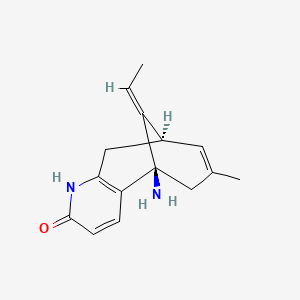
Huperzine A
A cholinesterase inhibitor with mixed Alzheimer-disease trial results and no established general focus benefit.
Mixed clinical trials; primary endpoint failure
Practical use
Reviewed practical notes
- Read the primary result first
- Do not let a favorable secondary time point replace the trial’s main conclusion.
- Check medicine overlap
- Identify the active ingredient and discuss its cholinesterase action during a medication review.
- Keep the population attached
- An Alzheimer-disease study is not a healthy-user enhancement trial.
Overview
Huperzine A inhibits the enzyme that breaks down acetylcholine. Its plant origin does not make that pharmacological action equivalent to ordinary dietary choline. The most informative cited trials studied diagnosed Alzheimer disease.
Risks and limitations
An earlier trial reported transient ankle swelling and insomnia in a small proportion of treated patients. Short trials cannot characterize uncommon harms or prolonged use in healthy people. The enzyme target also makes medication review more relevant than a “natural” label.
How to read this
Check whether a claim cites the main outcome chosen before a trial or a favorable secondary analysis. A secondary signal can justify more research without establishing effectiveness or a reason to replace prescribed care.
Research explained
US phase II Alzheimer trial
Who was studied
210 people with mild-to-moderate Alzheimer disease randomized to placebo or two huperzine A groups; 177 completed the treatment phase.
What was found
The prespecified cognitive comparison at week 16 did not show benefit. A higher-exposure secondary analysis was favorable at week 11 but not statistically significant at week 16; daily function and global outcomes were not significantly improved.
What it cannot establish
The main outcome was negative. Selecting the best time point or secondary comparison overstates the result, and patients with dementia are not a healthy-focus population.
Read the original studyEarlier multicenter Alzheimer trial
Who was studied
202 patients with possible or probable Alzheimer disease at 15 centers in China; randomized double-blind placebo comparison for 12 weeks.
What was found
The investigators reported more cognitive and daily-function responders with huperzine A. Mild transient adverse events were reported in 3% of treated patients.
What it cannot establish
A short trial with several scales; the English abstract was reviewed, not the Chinese full report. Its positive conclusion must be considered alongside the later negative primary analysis.
Read the original studyA drug-like mechanism needs outcome evidence
Increasing acetylcholine signaling does not guarantee better memory in every setting. These studies do not test exam performance, healthy-workplace productivity or prevention of dementia.
Supporting sourceSources
Sources checked 2026-10-01.
General education; not a personal treatment plan.