

Peptides
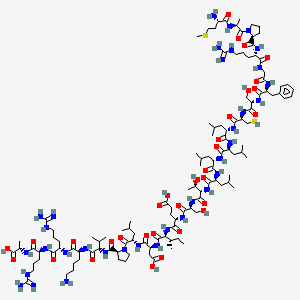
Humanin
A mitochondria-associated research peptide with cell-protection and rodent metabolic findings; human tissue and blood observations do not establish a human therapy.
Cell and rodent intervention studies; human component observational
Also known as: HN
Practical use
Evidence interpretation and clinical context
- Identify the exact molecule
- Keep native humanin separate from HNG and other modified analogues.
- Locate the human evidence
- Check whether people received an intervention or only had blood sampled.
- Separate association from replacement
- A lower level with age is a hypothesis-generating observation, not a validated reason for supplementation.
Humanin: a novel central regulator of peripheral insulin action.
An ingredient identifier is not an approval — primary or official source
Overview
Humanin is a short peptide investigated in cell-stress, neurodegeneration and metabolic research. Studies may use native humanin or modified analogues with different potency. The name refers to the molecule’s discovery context, not proof of therapeutic benefit in humans.
Risks and limitations
The cited experiments do not define a human therapeutic window or long-term safety. An analogue’s activity in a rodent or a cultured cell cannot establish the safety or identity of a marketed humanin product.
How to read this
Finding lower circulating levels with age can generate a hypothesis. It does not prove that a deficiency causes aging or that replacing the molecule will improve health.
Research explained
A rescue factor abolishing neuronal cell death by a wide spectrum of familial Alzheimer's disease genes and Abeta.
Who was studied
Cultured neuronal-cell experiments involving familial Alzheimer-related genes and amyloid-beta.
What was found
Humanin-related expression or peptide activity protected cells from several Alzheimer-associated insults, but not every tested cause of cell death.
What it cannot establish
The study measured cell survival. It did not treat patients with Alzheimer disease or measure memory decline.
Read the original studyHumanin: a novel central regulator of peripheral insulin action.
Who was studied
Mechanistic rodent insulin-action experiments, including humanin analogues, plus age-related peptide measurements in rodents and humans.
What was found
Humanin-related interventions improved insulin-action measures in experimental animals. A potent analogue lowered glucose in diabetic rats; circulating humanin was lower with age in human samples.
What it cannot establish
The human measurements were observational. They do not establish that administering humanin improves human glucose control, cognition or longevity.
Read the original studyHuman data can mean several different things
A human blood measurement and a randomized treatment study are different evidence levels. The intervention results cited here are preclinical.
Supporting sourceAn ingredient identifier is not an approval
FDA’s substance database gives humanin a chemical identifier and explicitly states that a UNII identifier does not imply regulatory review or approval. It should not be used as an approval badge.
Supporting sourceClaims versus findings
Not established
Humanin protected Alzheimer-model cells, so it prevents dementia in people.
Cell survival under selected laboratory insults is not a dementia-prevention trial.
Check the evidenceCommon questions
Can native humanin and a potent analogue share the same claims?
Only when the actual study supports that comparison. Sequence changes and different exposures can change activity.
SourceSources
Humanin: a novel central regulator of peripheral insulin action.
An ingredient identifier is not an approval — primary or official source
Sources checked 2026-10-01.
General education; not a personal treatment plan.