

SARMs
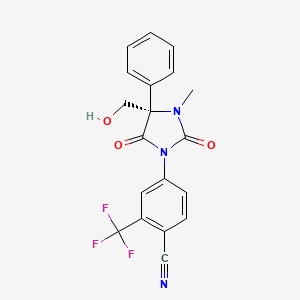
GLPG0492
A SARM studied in mouse models of immobilization and muscular dystrophy, with muscle signals that remain preclinical.
Two mouse disease models; human functional benefit not established by these studies
Practical use
Evidence interpretation and clinical context
- Name the model
- Distinguish immobilization from genetic muscular dystrophy.
- Separate a signal from validation
- A metabolite pattern is not a proven marker of clinical recovery.
- Look for patient function
- Human walking, strength and disability outcomes would be needed to substantiate treatment claims.
Overview
GLPG0492 is a nonsteroidal androgen-receptor modulator. Its published animal work explored muscle wasting after immobilization and disease-related weakness in mdx mice, a model used to study Duchenne muscular dystrophy.
Risks and limitations
Sparing reproductive tissues in a short mouse experiment is a limited safety observation. These studies do not establish a safe treatment for people with muscular dystrophy or for healthy adults seeking muscle gain.
How to read this
Two positive animal models can strengthen a biological hypothesis while leaving the same translation gap: neither tells us whether patients walk farther, remain independent longer or experience fewer serious harms.
Research explained
Characterization of GLPG0492, a selective androgen receptor modulator, in a mouse model of hindlimb immobilization.
Who was studied
Mice with hindlimb immobilization, compared with untreated animals and testosterone propionate.
What was found
GLPG0492 partially reduced immobilization-associated muscle loss and changed muscle gene-expression and circulating metabolic patterns.
What it cannot establish
The protection was partial and measured in mice. Proposed metabolic biomarkers were not validated as clinical treatment benefits.
Read the original studyGLPG0492, a novel selective androgen receptor modulator, improves muscle performance in the exercised-mdx mouse model of muscular dystrophy.
Who was studied
Exercised mdx mice studied over short and longer experimental periods.
What was found
Investigators reported improvements in strength and fatigue-related measures, with selected muscle and tissue changes.
What it cannot establish
The mdx model does not reproduce every feature of human Duchenne muscular dystrophy. This was not evidence of a cure or a patient trial.
Read the original studyRegulatory status
FDA states that SARMs are unapproved drugs, not dietary supplements.
Supporting sourceBiomarkers versus recovery
The immobilization paper linked plasma metabolites to bioenergetic pathways. Such a signature can help research but does not itself demonstrate restored mobility.
Supporting sourceClaims versus findings
Unproven extrapolation
Animal muscle protection proves recovery from human injury.
The experiments used controlled mouse models rather than injured patients undergoing rehabilitation.
Check the evidenceCommon questions
Why include the muscular-dystrophy study?
It tests the hypothesis in a second disease model, while retaining the species and disease limitations.
SourceSources
Regulatory status — primary or official source
Sources checked 2026-10-01.
General education; not a personal treatment plan.