

Hormone medicines
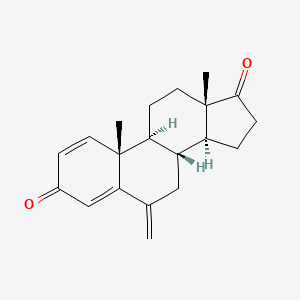
Exemestane
An aromatase inhibitor used in breast-cancer care; bone health and drug interactions remain relevant.
Established medical uses
Also known as: Aromasin
Practical use
Applying the explained evidence
- Where it fits
- An aromatase inhibitor used in breast-cancer care; bone health and drug interactions remain relevant.
- Put the information into practice
- Reducing a hormone is not the same as selectively removing an unwanted symptom. The clinical source supports disease-specific treatment, not a self-directed hormone-control routine.
- Diagnosis before a number
- Write down the symptoms, the reason a test was ordered, and the medicines already used. An isolated hormone result is a question to interpret, not a stand-alone reason to add another medicine.
- Keep this limit in view
- A short study cannot establish long-term skeletal or reproductive safety. Hormone percentages are not a validated target for self-treatment. An erratum is indexed with the original article and should be considered when reading it.
Overview
Exemestane decreases estrogen production through aromatase inhibition. Its established uses include postmenopausal breast cancer after tamoxifen treatment or progression on tamoxifen.
Risks and limitations
Joint discomfort, hot flashes, fatigue and mood or sleep changes are reported. Bone mineral density may fall. St. John’s wort can interact with treatment; liver and kidney history should be considered. Chest pain or shortness of breath needs prompt assessment.
How to read this
Reducing a hormone is not the same as selectively removing an unwanted symptom. The clinical source supports disease-specific treatment, not a self-directed hormone-control routine.
Research explained
Short-term pharmacology in young males
Who was studied
12 healthy male subjects aged 14–26 in a crossover experiment with ten-day treatment periods; a separate pharmacokinetic assessment involved ten participants.
What was found
Estradiol fell by 38% and 32% in the two exposure periods, while testosterone increased 60% and 56%. Peak drug concentration occurred at about one hour; the reported terminal half-life was 8.9 hours.
What it cannot establish
A short study cannot establish long-term skeletal or reproductive safety. Hormone percentages are not a validated target for self-treatment. An erratum is indexed with the original article and should be considered when reading it.
Read the original studyExposure in renal and hepatic impairment
Who was studied
Two single-administration studies in postmenopausal women with normal or varying impaired organ function.
What was found
Systemic exposure was approximately two to three times greater in the impaired groups, associated with reduced apparent oral clearance.
What it cannot establish
This is pharmacokinetic evidence in a different population, not a basis for calculating an individual adjustment or transferring the young-male half-life to every patient.
Read the original studyPlasma half-life and enzyme effect are different measurements
Exemestane is an irreversible aromatase inhibitor. Its concentration in plasma and the time course of hormone suppression need not be identical. In the short male study, peak drug concentration preceded the greatest reported estradiol suppression. A single clearance number cannot describe the whole endocrine response.
Supporting sourceSources
Short-term pharmacology in young males
Exposure in renal and hepatic impairment
Sources checked 2026-09-28.
General education; not a personal treatment plan.