

Androgens
Ethylestrenol
A steroid whose historical fibrinolysis research illustrates why better laboratory markers need not mean fewer blood clots.
Historical randomized combination trial with clinical outcome; evidence checked 2026-10-01
Also known as: Ethyloestrenol
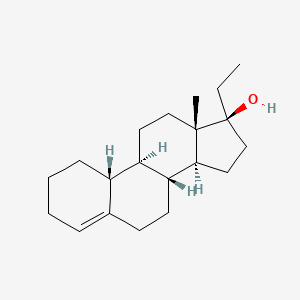
Practical use
Evidence interpretation and concrete review questions
- Prefer patient outcomes
- Ask whether a study counted clots, bleeding, hospitalization or only blood markers.
- Keep combination status
- Do not relabel the result as ethylestrenol-alone evidence.
- Use current clinical care
- A clot-prevention decision needs a contemporary clinical assessment.
Overview
Ethylestrenol, also spelled ethyloestrenol, has been studied in older combination treatment intended to alter fibrinolysis—the breakdown of blood clots. The relevant clinical experiment tested it with phenformin, not alone.
Risks and limitations
The combination did not reduce postoperative deep-vein thrombosis in the cited trial. A favorable laboratory effect cannot be used as reassurance against clot risk or a reason to replace established clinical care.
How to read this
The outcome that matters is the event experienced by patients, not simply an apparently favorable direction in a coagulation-related assay.
Research explained
Postoperative thrombosis prevention trial
Who was studied
314 surgical patients in a double-blind randomized comparison of a phenformin/ethyloestrenol regimen.
What was found
Laboratory testing suggested increased fibrinolytic-system activators, but postoperative deep-vein thrombosis incidence was not reduced.
What it cannot establish
A combination trial cannot isolate ethylestrenol. Older surgical practice and incomplete abstract detail limit present-day comparisons.
Read the original studyThe surrogate and clinical endpoint disagreed
Increased fibrinolytic activity did not translate into fewer postoperative clots.
Supporting sourceTwo active drugs are one studied regimen
The trial cannot assign laboratory changes or harms separately to ethylestrenol.
Supporting sourceClaims versus findings
Contradicted in this trial
Improving a fibrinolysis marker guarantees clot prevention.
The clinical clot outcome did not improve.
Check the evidenceCommon questions
Does this paper establish a current thrombosis-prevention regimen?
No. It reports a historical comparison without the proposed clinical benefit.
SourceSources
Postoperative thrombosis prevention trial
PubChem chemical identity; checked October 1, 2026
Sources checked 2026-10-01.
General education; not a personal treatment plan.