

Metabolic medicines
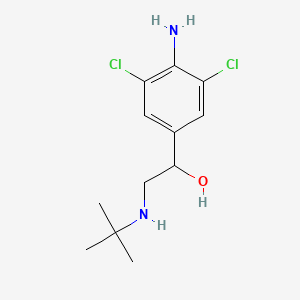
Clenbuterol
A beta-2 agonist with new resistance-training data and documented cardiac and metabolic toxicity; benefit studies do not establish safety.
Human evidence / important limitations
Practical use
Applying the explained evidence
- Where it fits
- A beta-2 agonist with new resistance-training data and documented cardiac and metabolic toxicity; benefit studies do not establish safety.
- Put the information into practice
- An effect on lean mass is not the same as fat loss. A small supervised trial cannot estimate the risks of unsupervised use, uncertain products or combinations.
- The outcome being treated
- Identify whether the evidence concerns a diagnosed condition, body weight, appetite or a laboratory marker. Check which outcomes were measured and over what follow-up before transferring a finding to another goal.
- Keep this limit in view
- Published in September 2026. It is one small trial, not a long-term safety study or a guarantee that initial gains persist.
Overview
Clenbuterol stimulates beta-2 adrenergic receptors. It has been investigated for body-composition effects, but controlled training outcomes and poisoning reports answer different questions.
Risks and limitations
Poison-centre reports describe rapid heartbeat, palpitations, chest pain, tremor, low potassium, elevated glucose and markers of heart injury. Chest pain or severe persistent palpitations after exposure needs urgent medical assessment, not another compound added to manage symptoms.
How to read this
An effect on lean mass is not the same as fat loss. A small supervised trial cannot estimate the risks of unsupervised use, uncertain products or combinations.
Research explained
Resistance training, detraining and retraining
Who was studied
32 healthy young adults, evenly split by sex and randomized 16 per group. Eight weeks of training were followed by sixteen weeks of detraining and eight weeks of retraining.
What was found
Compared with placebo, initial lean-mass gain was 1.7 kg greater, bench-press gain 6 kg greater and leg-press gain 16 kg greater. Fat-mass reduction did not significantly differ (P=.614). After detraining, the initial lean-mass advantage was no longer significant; retraining did not produce greater lean-mass gains from prior exposure.
What it cannot establish
Published in September 2026. It is one small trial, not a long-term safety study or a guarantee that initial gains persist.
Read the original studyPoison-centre case series
Who was studied
13 clenbuterol exposures reported to two poison centres; eleven involved weight-loss or bodybuilding misuse.
What was found
Reported effects included tachycardia, hypokalemia, hyperglycemia, ECG changes and elevated troponin, alongside chest pain, palpitations and tremor.
What it cannot establish
A referral-based case series describes possible harms; it cannot calculate the probability of those harms among all users.
Read the original studyDocumented cardiac toxicity after a large exposure
Who was studied
A 23-year-old man presented with anxiety, chest tightness and ECG abnormalities.
What was found
Potassium was 2.0 mmol/L; peak lactate reached 9.4 mmol/L and peak troponin 5.39 micrograms/L. Abnormal heart rate and ECG findings resolved after hospital treatment over approximately 48 hours.
What it cannot establish
This is a single poisoning case, not a typical-dose risk estimate or a treatment recipe.
Read the original studyWhy positive training results do not establish a fat-loss claim
The recent randomized training study found an advantage in lean mass and selected strength outcomes while the between-group fat-loss comparison was nonsignificant. Those endpoints should remain separate in any summary.
Supporting sourceSources
Resistance training, detraining and retraining
Documented cardiac toxicity after a large exposure
Sources checked 2026-09-28.
General education; not a personal treatment plan.