

Nootropics
Citicoline
A choline-related compound with some positive memory-test findings, but a 2024 EFSA assessment did not establish the proposed memory health claim.
Human trials / outcome-specific evidence
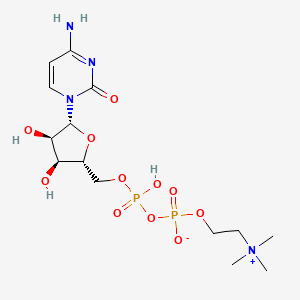
Also known as: CDP-choline · cytidine diphosphocholine
Practical use
Applying the explained evidence
- Where it fits
- A choline-related compound with some positive memory-test findings, but a 2024 EFSA assessment did not establish the proposed memory health claim.
- Put the information into practice
- Age-related subjective memory impairment, dementia, stroke recovery and enhancement in young healthy adults are different populations. Findings should not be transferred between them without direct evidence.
- Make the claim measurable
- Specify the claimed effect: alertness, memory, attention or another outcome. Check whether researchers measured that outcome directly; a mechanism or a subjective feeling is a different kind of evidence.
- Keep this limit in view
- The 12-week trial tested memory scores in older adults. It did not measure whether participants later developed dementia.
Overview
Citicoline is also called CDP-choline. Its biological role provides a rationale for memory research; whether supplementation improves meaningful cognitive function is a separate clinical question.
Risks and limitations
The 2021 trial followed participants for 12 weeks with adverse-event questions and laboratory checks. That design does not establish rare-event rates, safety in every neurological condition or the effects of combining multiple nootropics.
How to read this
Age-related subjective memory impairment, dementia, stroke recovery and enhancement in young healthy adults are different populations. Findings should not be transferred between them without direct evidence.
Research explained
Twelve-week memory trial
Who was studied
100 adults aged 50–85 with age-associated memory impairment: 49 assigned citicoline and 51 placebo; 99 completed.
What was found
Episodic-memory score changes averaged 0.15 versus 0.06 (P=.0025), and composite-memory changes were 3.78 versus 0.72 (P=.0052). Both were secondary outcomes.
What it cannot establish
These are test-score changes, not percentages of intelligence or prevention of dementia. Several authors had manufacturer affiliations.
Read the original studyEarlier study and subgroup follow-up
Who was studied
95 middle-aged and older adults in a three-month study; a subgroup of 32 relatively inefficient memory performers entered a crossover phase.
What was found
The initial delayed-recall signal appeared in the lower-performing subgroup. The crossover component reported immediate- and delayed-recall improvements.
What it cannot establish
A selected subgroup does not establish the same benefit in all healthy adults. The design and selection matter when comparing it with later trials.
Read the original studyEFSA assessment of the proposed memory claim
Who was studied
2024 evaluation of the submitted human evidence for middle-aged or older people with subjective age-associated memory impairment.
What was found
The panel found one positive episodic-memory trial but inconsistent support from other studies. It concluded that the proposed cause-and-effect relationship had not been established.
What it cannot establish
This is an assessment of a particular health claim, not proof that every possible clinical use is ineffective. It provides an important counterweight to isolated positive results.
Read the original studyMechanistic plausibility versus demonstrated benefit
EFSA found that the submitted mechanism did not convincingly explain an additional memory benefit beyond normal endogenous processes. A compound being part of ordinary brain metabolism does not by itself prove that taking more improves function.
Supporting sourceClaims versus findings
Not established by these studies
Clinically proven to prevent dementia
The 12-week trial tested memory scores in older adults. It did not measure whether participants later developed dementia.
Check the evidenceSources
Earlier study and subgroup follow-up
EFSA assessment of the proposed memory claim
Sources checked 2026-09-28.
General education; not a personal treatment plan.