

Metabolic medicines
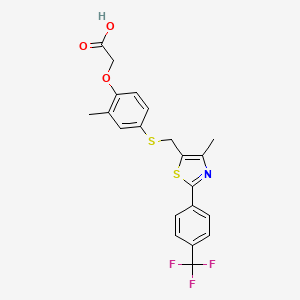
Cardarine
A PPAR-delta agonist, not a SARM, with short human lipid studies and major preclinical safety concerns.
Human evidence / important limitations
Also known as: GW501516 · GW1516
Practical use
Applying the explained evidence
- Where it fits
- A PPAR-delta agonist, not a SARM, with short human lipid studies and major preclinical safety concerns.
- Put the information into practice
- Positive surrogate endpoints can coexist with unacceptable safety concerns. Do not interpret better HDL or apoB as evidence that a compound makes another risky drug safer.
- The outcome being treated
- Identify whether the evidence concerns a diagnosed condition, body weight, appetite or a laboratory marker. Check which outcomes were measured and over what follow-up before transferring a finding to another goal.
- Keep this limit in view
- These are short-term lipid outcomes, not fewer heart attacks, longer lifespan or proof of safe athletic use.
Overview
GW501516 was investigated for metabolic effects through PPAR-delta signaling. Changing lipid markers does not establish protection against cardiovascular events or safe endurance enhancement.
Risks and limitations
WADA issued an unusual public health alert after serious preclinical toxicities halted development. A twelve-week human study cannot resolve long-latency risks or supply a safe human threshold.
How to read this
Positive surrogate endpoints can coexist with unacceptable safety concerns. Do not interpret better HDL or apoB as evidence that a compound makes another risky drug safer.
Research explained
Twelve-week lipid trial
Who was studied
268 participants with low HDL cholesterol randomized to placebo or one of three active groups; a separate exploratory study included 37 participants.
What was found
Reported changes included HDL increases up to 16.9%, apoA-I increases up to 6.6%, and reductions in LDL of 7.3%, triglycerides of 16.9% and apoB of 14.9%.
What it cannot establish
These are short-term lipid outcomes, not fewer heart attacks, longer lifespan or proof of safe athletic use.
Read the original studyDevelopment history and the safety alert
The 2013 WADA alert explains that development stopped after serious toxicities in preclinical studies. It warns against performance-enhancement use despite black-market availability. The alert and the short lipid trial must be read together; one cannot cancel the other.
Supporting sourceSources
Development history and the safety alert
Sources checked 2026-09-28.
General education; not a personal treatment plan.