

Hormone medicines
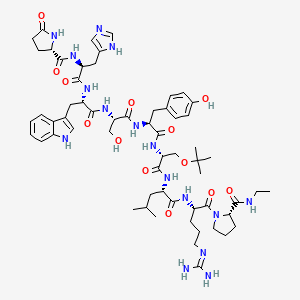
Buserelin
A GnRH agonist used in specialist hormonal care, with endometriosis research showing pain improvement alongside bone loss.
Small human endometriosis studies plus current UK product information
Also known as: Suprecur
Practical use
Evidence interpretation and clinical context
- Match the formulation and indication
- The injection label reviewed here concerns specialist ovulation-induction preparation.
- Keep bone outcomes visible
- Hormonal symptom relief can coexist with loss of bone mineral.
- Read the actual trial question
- Enrollment of infertile women does not make pain relief a fertility outcome.
Hormone treatment related bone mineral content changes in Japanese women with endometriosis.
Overview
Buserelin activates gonadotropin-releasing hormone receptors. Sustained stimulation can desensitize the pituitary and suppress downstream gonadal hormone production. Its effects therefore differ from a simple testosterone-boosting claim.
Risks and limitations
Bone loss, low-estrogen symptoms and mood effects are material concerns. The current UK product information also addresses severe depression, altered glucose tolerance and QT-related risk in relevant patients. Assisted-reproduction use adds its own procedure-related considerations.
How to read this
An agonist can ultimately suppress a hormonal pathway when prolonged stimulation changes receptor responsiveness. The sequence matters more than the everyday assumption that agonist always means more hormone.
Research explained
Buserelin acetate in the treatment of pelvic pain associated with minimal and mild endometriosis: a controlled study.
Who was studied
35 infertile women with minimal or mild endometriosis randomized to buserelin or expectant management.
What was found
Pain symptoms improved during treatment, and improvement persisted in approximately half of treated participants after withdrawal. Some untreated participants also improved spontaneously.
What it cannot establish
The trial was small and used expectant management rather than a blinded placebo. Pain effects do not establish improved fertility.
Read the original studyHormone treatment related bone mineral content changes in Japanese women with endometriosis.
Who was studied
19 Japanese women with endometriosis: ten received buserelin and nine danazol over six months.
What was found
Lumbar trabecular bone mineral content fell by about 10% on average in the buserelin group and recovered only partially over the subsequent six months.
What it cannot establish
This was a small study using a particular CT-based bone measurement. Its percentage should not be generalized to every skeletal site or treatment setting.
Read the original studyCurrent UK product context
The Suprecur injection product information reviewed here lists pituitary desensitization in preparation for ovulation induction. Other research settings and formulations must not be silently substituted for this exact indication.
Supporting sourceBenefit and harm use different endpoints
Pain relief and bone loss can both be true. A useful evidence summary retains both rather than treating symptom improvement as a complete benefit-risk judgment.
Supporting sourceClaims versus findings
Incorrect mechanism
A GnRH agonist necessarily raises sex hormones throughout use.
Sustained receptor stimulation can produce pituitary desensitization and downstream suppression.
Check the evidenceCommon questions
Did the pain trial prove better fertility?
No. Its outcomes concerned pain symptoms, despite enrolling infertile women.
SourceSources
Hormone treatment related bone mineral content changes in Japanese women with endometriosis.
Current UK product context — primary or official source
Sources checked 2026-10-01.
General education; not a personal treatment plan.