

Peptides
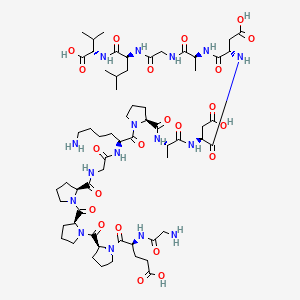
BPC-157
An experimental peptide whose human safety cannot be established from online healing claims.
Limited human safety evidence
Also known as: BPC157
Practical use
Applying the explained evidence
- Where it fits
- An experimental peptide whose human safety cannot be established from online healing claims.
- Put the information into practice
- Uncertainty about safety is not evidence of safety. Product quality and route matter.
- Check what was actually tested
- Match the exact molecule, formulation and study setting to the claim. A result for a related peptide, a cell model or an animal model does not establish the same result for a marketed human-use product.
- Keep this limit in view
- Pain relief and structural repair need different measurements. The retrospective report cannot establish a causal tissue-repair effect.
Overview
BPC-157 is discussed in experimental peptide research. FDA reports insufficient safety information for proposed administration routes.
Risks and limitations
FDA identifies potential immune reactions and peptide-impurity concerns.
How to read this
Uncertainty about safety is not evidence of safety. Product quality and route matter.
Research explained
Retrospective knee-pain report
Who was studied
A small retrospective clinical report of people treated for different types of knee pain, with BPC-157 alone or alongside thymosin beta-4.
What was found
The report describes patient-reported improvement following treatment.
What it cannot establish
No randomized placebo comparison: improvement cannot be separated confidently from natural recovery, other care, selection bias or expectation. A pain report does not demonstrate structural tendon or cartilage repair.
Read the original studyThe healing claim needs a defined outcome
“Healing” can mean less pain, improved range of motion, a stronger repaired tendon or an imaging finding. These are not interchangeable. The human knee report is not proof of faster tendon repair, and a laboratory or animal endpoint should not be relabeled as a proven human result.
Supporting sourceProduct uncertainty is separate from molecule uncertainty
FDA identifies concerns about immune responses, peptide impurities and characterization of the active material. Those questions are separate from whether a particular experimental effect is reproducible. A product name, a purity percentage or a research-only label does not by itself answer both questions.
Supporting sourceWhat a stronger study would need
For a musculoskeletal claim, useful evidence would define the injury, use an appropriate comparison group, measure validated pain and function outcomes, distinguish subjective improvement from structural recovery, and track adverse events for long enough. That is an evaluation checklist, not a claim that such evidence already exists.
Claims versus findings
Not established
“People felt better, so it repaired their tissue.”
Pain relief and structural repair need different measurements. The retrospective report cannot establish a causal tissue-repair effect.
Check the evidenceCommon questions
Is limited safety data the same as “no side effects”?
No. If a study is too small, too short or not designed to detect harms, it may fail to observe uncommon or delayed problems. FDA explicitly describes insufficient information for the proposed routes.
SourceSources
FDA: compounding safety concerns
Retrospective knee-pain report
Sources checked 2026-09-28.
General education; not a personal treatment plan.