

Androgens
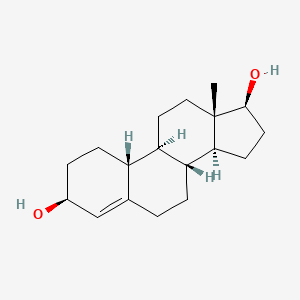
Bolandiol
A synthetic diol with androgenic, estrogenic and progestational activity in preclinical experiments.
Receptor assays and rat experiments; evidence checked 2026-10-01
Also known as: 19-norandrostenediol
Practical use
Evidence interpretation and concrete review questions
- Read each receptor separately
- Ask whether androgen, progesterone or estrogen signaling was measured.
- Name the tissue and species
- A rat muscle or uterus result is not a human clinical outcome.
- Keep fertility distinct
- Muscle-related activity says little about preserving reproductive function.
Overview
Bolandiol is 19-nortestosterone-3β,17β-diol, also called 19-norandrostenediol. The unesterified molecule and bolandiol dipropionate are different formulations. This guide concerns the receptor and animal evidence for the parent compound.
Risks and limitations
The study describes suppression of gonadotropins and endogenous testosterone, alongside more than one receptor activity. Favorable tissue selectivity in rats does not establish preservation of human fertility or absence of estrogenic effects.
How to read this
“Not aromatized” and “no estrogen-receptor activity” are different propositions; this experiment makes that distinction concrete.
Research explained
Multiple receptor activities
Who was studied
Binding and transcription assays using androgen, progesterone and estrogen receptors, with experiments in male and female rats.
What was found
Bolandiol activated all three receptor pathways. It stimulated levator ani muscle and uterine growth, yet was not aromatized by recombinant human aromatase in the assay.
What it cannot establish
Rat organ weights and laboratory potency do not establish a human muscle-to-side-effect ratio or a useful clinical regimen.
Read the original studyDirect signaling can bypass conversion
Estrogenic activity occurred despite no aromatization in the assay. A conversion claim cannot exclude direct receptor effects.
Supporting sourceDo not merge parent and ester
An ester changes the formulation being investigated; keep that distinction in the study description.
Supporting sourceClaims versus findings
Incorrect
Failure to aromatize proves no estrogenic effect.
The study demonstrated estrogen-receptor activity and uterine effects.
Check the evidenceCommon questions
Does tissue selectivity mean no reproductive suppression?
No. The report specifically discusses suppression of gonadotropins and testosterone.
SourceSources
PubChem chemical identity; checked October 1, 2026
Sources checked 2026-10-01.
General education; not a personal treatment plan.