

Performance supplements
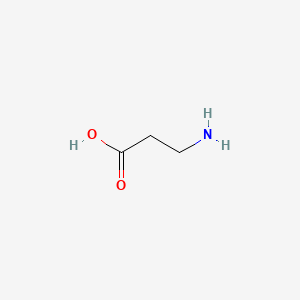
Beta-alanine
Raises muscle carnosine over weeks; tingling is not a measurement of performance or muscle growth.
Human muscle-biopsy and tolerability studies
Practical use
Applying the explained evidence
- Where it fits
- Raises muscle carnosine over weeks; tingling is not a measurement of performance or muscle growth.
- Put the information into practice
- Buffering-related capacity, race performance, maximal strength and hypertrophy should be evaluated separately. This entry does not convert a cycling-capacity result into a bodybuilding gain forecast.
- Connect evidence to your training
- Specify the outcome you want to improve and a repeatable way to measure it. Check whether the study participants, activity and product match the claim; avoid crediting one supplement for changes made alongside several training or diet changes.
- Keep this limit in view
- The muscle-biopsy and exercise outcomes were separate from sensory effects.
Overview
Beta-alanine supplies a building block for carnosine, an intracellular muscle buffer. Increasing this reservoir is a chronic adaptation; it is different from an immediate stimulant sensation.
Risks and limitations
Paresthesia—tingling or prickling—can occur. A small high-intake trial found mostly low-intensity symptoms, but it was too small and short to settle uncommon harms or long-term laboratory effects.
How to read this
Buffering-related capacity, race performance, maximal strength and hypertrophy should be evaluated separately. This entry does not convert a cycling-capacity result into a bodybuilding gain forecast.
Research explained
Muscle storage and high-intensity capacity
Who was studied
13 supplemented and 12 matched control men; smaller subsets continued to ten weeks and underwent biopsy.
- Carnosine increase at four weeks
- 58.8 %
- Carnosine increase at ten weeks
- 80.1 %
What was found
Muscle carnosine rose 58.8% at four weeks and 80.1% at ten weeks. Total work in the fixed high-intensity cycling-capacity test increased 13.0% at four weeks, with a further 3.2% reported at ten.
What it cannot establish
Small, shrinking subsets; capacity to exhaustion is not a timed race or muscle-size endpoint.
Read the original studySymptoms and blood measurements
Who was studied
19 recreationally trained men; randomized 30-day sustained-release study.
What was found
Tingling was common but generally rated below 3/10. Triglycerides, LDL and urea nitrogen rose within the active group, without significant differences versus the control group.
What it cannot establish
Within-group changes do not establish a treatment effect. This unusual high-intake formulation does not describe every product.
Read the original studyStorage is the relevant mechanism
The biopsy study links accumulated carnosine with work capacity. Skin sensations were not the performance endpoint.
Supporting sourceCapacity is task-specific
The test used cycling above maximal aerobic power until exhaustion. A percentage change there is not the same percentage improvement in a sprint, lift or race.
Supporting sourceRead the laboratory comparison correctly
A significant before/after change in one arm and no significant between-arm difference are not evidence of a proven lipid effect.
Supporting sourceRelease form is a variable
The tolerability study tested a specified sustained-release preparation; adverse-event patterns cannot be generalized to every immediate-release blend.
Supporting sourceWhat is still missing
The small samples do not establish years-long safety, effectiveness in every sport, or an anabolic-steroid-like hypertrophy effect.
Supporting sourceClaims versus findings
Not established
More tingling means more benefit.
The muscle-biopsy and exercise outcomes were separate from sensory effects.
Check the evidenceCommon questions
Does increased carnosine prove more muscle?
No. Muscle carnosine concentration and muscle size are different measurements.
SourceSources
Muscle carnosine and cycling capacity
Sustained-release tolerability experiment
Sources checked 2026-09-28.
General education; not a personal treatment plan.