

Metabolic medicines
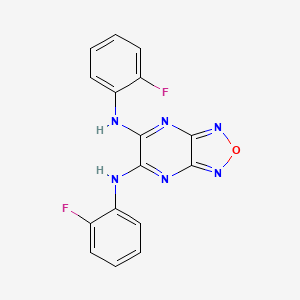
BAM15
A mitochondrial uncoupler studied in mice for obesity and metabolic function; promising animal findings do not establish a human fat-loss treatment.
Mouse metabolic and sarcopenic-obesity experiments; human efficacy unestablished
Also known as: BAM-15
Practical use
Evidence interpretation and clinical context
- State the species prominently
- A mouse result should remain labeled as a mouse result when shared.
- Separate percentages from grams
- Ask whether a muscle claim describes relative composition or absolute tissue gain.
- Look for direct human evidence
- Animal metabolism and toxicity panels cannot substitute for controlled human outcomes.
Mitochondrial uncoupler BAM15 reverses diet-induced obesity and insulin resistance in mice.
Overview
BAM15 is a small molecule, not a peptide. It reduces the coupling efficiency between mitochondrial fuel oxidation and ATP production, causing cells to expend more fuel for a given energy output. The central research question is whether this can improve metabolism without unacceptable toxicity.
Risks and limitations
A lack of measured toxicity or temperature rise in a mouse experiment does not establish a safe human exposure. The studies do not define long-term human cardiovascular, metabolic or organ risks.
How to read this
Mitochondrial uncouplers differ in their chemistry and tissue effects. BAM15 results should not be transferred to other uncouplers, and another compound’s risks do not quantify BAM15’s human safety.
Research explained
Mitochondrial uncoupler BAM15 reverses diet-induced obesity and insulin resistance in mice.
Who was studied
Diet-induced-obesity mouse experiments with body-composition, metabolic and insulin-clamp measurements.
What was found
BAM15 reduced fat mass and improved insulin sensitivity without a measured reduction in food intake or lean mass in the tested settings. The study did not observe a body-temperature rise under those conditions.
What it cannot establish
The intervention evidence was in mice. These selected safety measurements are not a human safety study.
Read the original studyMitochondrial uncoupling attenuates sarcopenic obesity by enhancing skeletal muscle mitophagy and quality control.
Who was studied
80-week-old male mice with obesity randomized to ten weeks of experimental treatment or control diet.
What was found
Treated mice weighed less and had better strength and activity measurements. The reported muscle-mass percentage was higher as body weight fell.
What it cannot establish
A higher muscle percentage is not necessarily an absolute muscle gain. The study used one sex, a mouse model and a limited observation period.
Read the original studyResearch status
The cited evidence does not establish a human therapeutic indication or a validated safe human exposure. BAM15 remains a preclinical topic in this guide, rather than an endorsed fat-loss option.
Supporting sourceWatch the denominator
If total weight falls, muscle can become a larger percentage of the body without increasing in grams. Relative body-composition figures must be read alongside absolute measurements.
Supporting sourceClaims versus findings
Not established
No temperature rise in mice proves BAM15 is a safe human uncoupler.
The experiment answers a limited question in its tested model; human tolerability and long-term safety require direct evidence.
Check the evidenceCommon questions
Does uncoupling simply mean producing more ATP?
No. It reduces coupling efficiency; the proposed effect involves using more fuel relative to ATP produced.
SourceSources
Mitochondrial uncoupler BAM15 reverses diet-induced obesity and insulin resistance in mice.
Sources checked 2026-10-01.
General education; not a personal treatment plan.