

Peptides
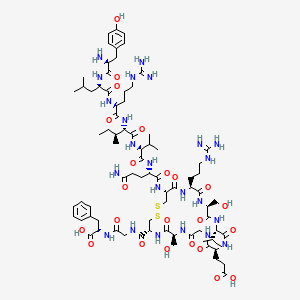
AOD-9604
A growth-hormone fragment investigated for obesity, with mouse fat-metabolism findings but a failed major human weight-loss study and unresolved compounded-product safety.
Animal mechanism studies and human safety reports; larger human obesity efficacy failure
Practical use
Evidence interpretation and clinical context
- Read efficacy separately
- Safety tolerability and weight-loss effectiveness require different evidence.
- Read beyond the abstract
- Check detailed adverse-event attribution before repeating a no-serious-events claim.
- Match the formulation
- Do not transfer historical trial findings to a differently manufactured or administered product.
Safety and Tolerability of the Hexadecapeptide AOD9604 in Humans
The decisive obesity limitation — primary or official source
Overview
AOD-9604 is a modified fragment from the C-terminal region of human growth hormone. Research attempted to separate fat-metabolism effects from other growth-hormone actions. That design goal should not be presented as a proven clinical outcome.
Risks and limitations
A published human safety analysis was broadly reassuring, but its detailed tables and narrative include a serious diarrhea event considered possibly related. FDA’s later review raises product-characterization and immunogenicity concerns, especially for compounded injectable formulations.
How to read this
A safety-focused article does not establish weight-loss efficacy. Mouse fat oxidation, human weight change and the safety of a particular formulation are three separate evidence questions.
Research explained
Increase of fat oxidation and weight loss in obese mice caused by chronic treatment with human growth hormone or a modified C-terminal fragment.
Who was studied
Lean and obese mice in a short fat-metabolism experiment.
What was found
AOD-9604 reduced weight gain in obese mice and changed fat oxidation and related metabolic measures.
What it cannot establish
The experiment was brief and preclinical. It does not establish clinically meaningful human weight loss or absence of metabolic risk.
Read the original studySafety and Tolerability of the Hexadecapeptide AOD9604 in Humans
Who was studied
A 2013 analysis of six placebo-controlled trials involving 893 adults, predominantly people with obesity; routes and durations varied.
What was found
The authors found no consistent increase in IGF-1 or adverse glucose effects and generally similar tolerability to placebo.
What it cannot establish
This was a safety-focused pooled account, not proof of efficacy or of safety for every formulation. A possibly related serious diarrhea event appears in the detailed results despite the broadly reassuring summary.
Read the original studyThe decisive obesity limitation
FDA’s review describes a 536-person obesity study that failed to show significant weight loss versus placebo. Development for obesity was subsequently terminated. The agency found insufficient evidence of effectiveness.
Supporting sourceProduct and route matter
FDA’s 2024 review states that neither AOD-9604 form is part of an FDA-approved drug. It highlights incomplete characterization of peptide impurities and aggregation, with potential immune risks. Historical oral or intravenous trial findings do not automatically validate contemporary compounded products.
Supporting sourceClaims versus findings
Not supported
Animal fat oxidation establishes an effective human fat-loss medicine.
The larger human obesity study did not demonstrate a significant placebo-adjusted weight-loss effect.
Check the evidenceCommon questions
Does the human safety paper prove all AOD-9604 products are safe?
No. It examined particular trial materials and conditions; its reassuring summary is also more sweeping than the detailed adverse-event narrative.
SourceSources
Safety and Tolerability of the Hexadecapeptide AOD9604 in Humans
The decisive obesity limitation — primary or official source
Sources checked 2026-10-01.
General education; not a personal treatment plan.