

Performance supplements
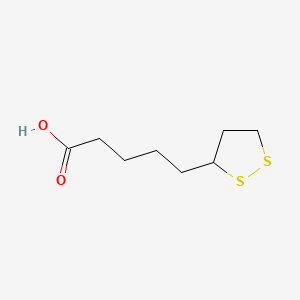
Alpha-lipoic acid
Diabetic nerve-symptom studies are more informative than generic antioxidant claims; rare immune-mediated hypoglycemia is a distinct concern.
Randomized neuropathy trials and regulatory safety assessment
Practical use
Applying the explained evidence
- Where it fits
- Diabetic nerve-symptom studies are more informative than generic antioxidant claims; rare immune-mediated hypoglycemia is a distinct concern.
- Put the information into practice
- Route, symptom scale, duration and underlying disease must stay attached to the result. Relief over weeks is not proof of permanent nerve repair or overall cardiovascular benefit.
- Connect evidence to your training
- Specify the outcome you want to improve and a repeatable way to measure it. Check whether the study participants, activity and product match the claim; avoid crediting one supplement for changes made alongside several training or diet changes.
- Keep this limit in view
- The oral study documented exposure-related adverse symptoms despite symptomatic benefit.
Overview
Alpha-lipoic acid, also called thioctic acid, has been investigated for symptomatic diabetic polyneuropathy. A symptom score in that disease is not a measure of muscle growth, nutrient partitioning or prevention of diabetes.
Risks and limitations
The oral trial reported exposure-related nausea, vomiting and vertigo. EFSA concluded supplemental alpha-lipoic acid can increase insulin-autoimmune-syndrome risk in susceptible people; a universally safe threshold could not be determined. Confusion, sweating, tremor or collapse can reflect serious hypoglycemia.
How to read this
Route, symptom scale, duration and underlying disease must stay attached to the result. Relief over weeks is not proof of permanent nerve repair or overall cardiovascular benefit.
Research explained
Oral symptom relief
Who was studied
181 people with diabetic distal symmetric polyneuropathy; three active levels versus placebo over five weeks.
- Symptom-score reduction: first active arm
- 4.9 points
- Symptom-score reduction: placebo
- 2.9 points
What was found
Total Symptom Score fell 4.9, 4.5 and 4.7 points in active groups versus 2.9 with placebo. Response rates were 62%, 50% and 56% versus 26%, respectively.
What it cannot establish
A short symptomatic trial. Higher exposure did not monotonically improve results and increased tolerability problems.
Read the original studyFour-year primary outcome was not significant
Who was studied
460 people with mild-to-moderate diabetic polyneuropathy, randomized to 233 active and 227 placebo participants for four years.
- Serious adverse events: active
- 38.1 %
- Serious adverse events: placebo
- 28 %
What was found
The primary composite neurological score did not significantly differ (P=0.105). Some secondary impairment scores favored treatment. Serious adverse events occurred in 38.1% versus 28.0%.
What it cannot establish
The placebo group did not significantly deteriorate on the primary composite. Serious events were not necessarily caused by treatment; overall tolerability and discontinuation for intolerance did not differ.
Read the original studyA score is not a cure
The oral study tracked pain, burning, tingling and numbness. Symptom improvement alone does not demonstrate removal of the underlying diabetes.
Supporting sourceMore was not necessarily better
The three active arms had similar symptom reductions while nausea, vomiting and vertigo increased with exposure.
Supporting sourceRare risk can be invisible in a small trial
A safety signal from susceptible individuals need not appear in a few hundred short-term trial participants.
Supporting sourceFood and concentrated supplements differ
EFSA did not identify evidence linking naturally occurring food alpha-lipoic acid with this syndrome; that does not erase the supplement-associated concern.
Supporting sourceLong-term outcomes can differ from symptom relief
The four-year trial did not achieve its primary composite endpoint. Favorable secondary impairment scores do not convert that into a positive primary result.
Supporting sourceClaims versus findings
Not established
Antioxidant action means no important side effects.
The oral study documented exposure-related adverse symptoms despite symptomatic benefit.
Check the evidenceCommon questions
Does symptom relief establish lasting nerve repair?
No. The longer trial did not significantly improve its primary neurological composite compared with placebo.
SourceSources
EFSA final insulin-autoimmune-syndrome opinion
Sources checked 2026-09-28.
General education; not a personal treatment plan.