

Peptides
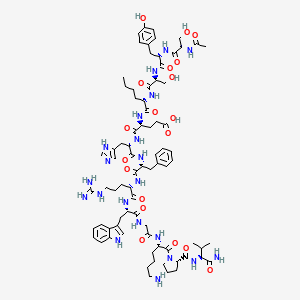
Afamelanotide
An implanted melanocortin medicine that increases pain-free sunlight exposure in adults with erythropoietic protoporphyria.
Two randomized EPP trials; no cosmetic-tanning inference
Also known as: Scenesse
Practical use
Clinical context and evidence interpretation
- Define the symptom
- Separate sunlight-triggered EPP pain from a cosmetic preference or ordinary sunburn when evaluating a claim.
- Track a useful outcome
- For an existing clinical review, record pain episodes, activity limitations and skin changes rather than using tanning alone as the success measure.
- Check the comparison
- When someone quotes hours of sunlight, ask whether the number is cumulative, which hours of the day counted, and how long participants were observed.
Overview
Afamelanotide is an analogue of alpha-melanocyte-stimulating hormone acting mainly at MC1 receptors. The US Scenesse implant is approved for adults with phototoxic reactions from erythropoietic protoporphyria (EPP). Its product, population and clinical purpose differ from cosmetic tanning products.
Risks and limitations
Implant-site reactions, nausea and changes in pigmentation occur. Existing moles can darken and new pigmented lesions need monitoring. The label calls for skin examinations and continued sun-protection measures. Serious hypersensitivity, including anaphylaxis, is possible; breathing difficulty or swelling needs emergency assessment.
How to read this
The practical benefit tested was more time in direct sunlight without the characteristic EPP pain. It was not a test of how dark a healthy person could tan or whether sun damage could be ignored.
Research explained
Two placebo-controlled EPP trials
Who was studied
74 patients in a European trial and 94 in a US trial; randomized, double-blind comparisons of afamelanotide implants with placebo over nine and six months, respectively.
What was found
Median cumulative pain-free direct-sunlight exposure in the US trial was 69.4 versus 40.8 hours. In Europe it was 6.0 versus 0.8 hours, with 77 versus 146 phototoxic reactions. Quality of life improved in both studies.
What it cannot establish
These are cumulative trial outcomes, not safe daily sun limits. Different study settings and exposure windows make the two hour totals unsuitable for direct comparison. Pigmentation may also make complete masking difficult.
Read the original studyPigmentation is a mechanism, not the whole outcome
The relevant clinical question is whether EPP symptoms and daily function improve. A darker skin tone alone does not demonstrate the trial’s clinical benefit.
Supporting sourceKeep the product identity visible
The evidence concerns a controlled-release prescription implant placed by trained professionals. It does not establish the identity, purity, effect or safety of a vial marketed under a similar peptide name.
Supporting sourceClaims versus findings
Not supported
Afamelanotide approval makes tanning peptides interchangeable.
An EPP implant trial cannot establish equivalence to other molecules, routes or unverified products.
Check the evidenceCommon questions
Do 69.4 hours mean I can stay outside that long at once?
No. That figure accumulated over six months under a defined study measurement. It is not an exposure recommendation.
SourceSources
Two placebo-controlled EPP trials
US prescribing information; checked October 1, 2026
Sources checked 2026-10-01.
General education; not a personal treatment plan.